
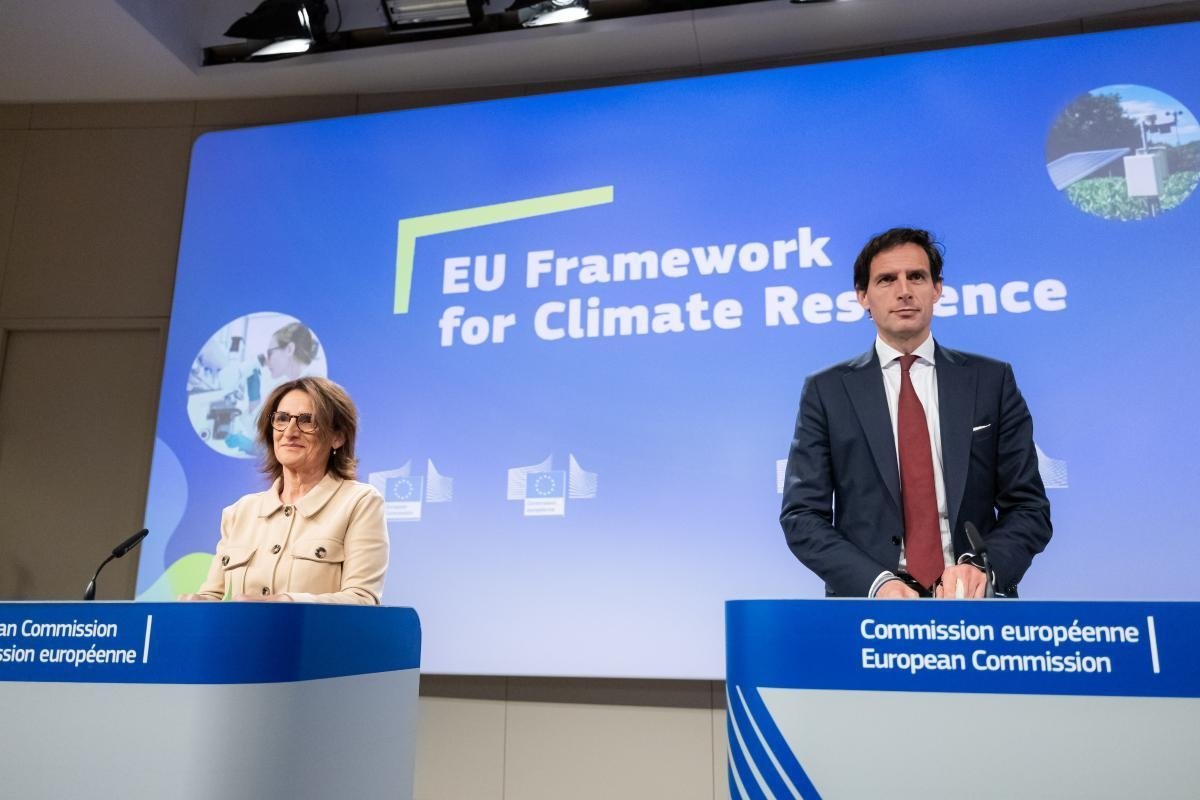
Last week, the European Commission presented a proposal for a new European framework for climate adaptation. The framework aims to strengthen Europe's ability to anticipate and manage the consequences of climate change, protect populations and vulnerable areas, and reduce socio-economic losses and material damage.
By Kaia Dahl-Solheim
The proposal represents a shift in the EU's climate policy approach, by focusing on reducing society's vulnerability to climate change, rather than solely prioritising emission reductions. The summer of 2026 has been marked by catastrophic climate-related events in Europe, which has further highlighted the need for a more holistic approach to climate adaptation. The European Commission stresses that "Europe is not well equipped to deal with the consequences of climate change for people, prosperity and security". Estimates show that the annual economic losses linked to climate change amount to around 50 billion euros.
At the same time, the Commission points to a significant untapped potential for European business, industry and investment in climate adaptation. Climate resilience is thus highlighted not only as an environmental and social concern, but also as a strategic investment in Europe's long-term competitiveness. A strengthened ability to manage climate-related risks is considered crucial for safeguarding economic stability, societal security and military preparedness, as well as the health and safety of the population.
© European Union, 2026, licensed under CC BY 4.0
The new framework is based on four overarching goals:
1) Strengthen investments and innovation in climate adaptation and the development of climate-resilient solutions.
2) Further develop the knowledge base for decision-making through better access to data, analyses and climate risk assessments.
3) Clarify the division of responsibilities between relevant authorities, institutions and other social actors.
4) Improve access to knowledge and practical solutions that can support the implementation of climate adaptation measures.
The European Commission further highlights that climate adaptation and resilience must be further integrated as fundamental principles in EU policy and legislative work. This means that consideration of climate risk and adaptation needs should increasingly be an integral part of policy-making and public planning across sectors. The proposal is also marked as EEA relevant, indicating that the framework may have significance for Norway at a later date.
Local and regional climate preparedness
A key element of the European Commission's proposal is to integrate local and regional perspectives into climate adaptation efforts. Europe's regions have different geographical, socio-economic and climatic conditions, which lead to significant variations in climate-related vulnerabilities. Effective adaptation therefore requires a place-specific and context-sensitive approach, where measures are developed based on local and regional risk conditions, needs and social structures. The framework is based on a mapping of Europe's most vulnerable areas and seeks to facilitate climate adaptation efforts that take these regional differences into account to a greater extent.
Initiatives such as the EU Mission on Adaptation to Climate Change and national adaptation centres will, among other things, contribute to strengthening local and regional ownership, capacity building, access to financing and knowledge sharing. The initiatives will also promote the testing and implementation of concrete adaptation solutions. A key ambition is to develop new measures, while strengthening coordination between local, regional and national authorities. Overall, the new framework signals a clearer recognition that climate adaptation must be integrated into societal planning at all levels of government.
Read more:
EU Framework for Climate Resilience - Climate Action - European Commission
Factsheet - EU Framework for Climate Resilience
Questions and answers on the EU Climate Resilience Framework
The Commission presents the Climate Resilience Framework for a better prepared and protected Europe